Showing posts with label memory. Show all posts

Saturday, 10 August 2024

Lessons from an autobiography

Every now and then, I get the desire to write down some part of my personal history. This time, it was from my early adulthood.

I spent several days, off and on, writing out and researching memories. I started with what I recall now, and then I looked up old emails.

I have always kept most of my old emails. I can access the ones that are from after 2004, which must have been when web mail programs stopped limiting space. I probably have even more saved somewhere, because I used to copy and paste them into long documents and save them. But likely they are on floppy disc or CD and not easily accessible.

I won’t post what I wrote, because it also involves other people.  The only way I would consider sharing it is in person, on paper, with no recording devices in the room. But I enjoyed the process and I think it was helpful.  Some insights I have:

1) Memory is a story, not a recording. Even the act of recalling requires putting a filter into what is recalled. What I mean is, I always remember with a purpose and then I specifically remember what seems to address that purpose. But as I actually read some of the old emails, I started to remember things that were omitted by the filter. There’s a lot more to my life than the story I tell myself.

2) I feel like my self and identity is pretty consistent over time, but reading old emails challenges that idea. Many times I would read over points I was trying to make in the emails and wonder: “What on earth was I thinking?” “What could have been motivating me to say that?” It was as much like trying to understand a character in a book as it was like recalling the details of an event.

This was especially revelatory as part of my motivation was to compare my memories with an account I read by someone I knew at roughly the same time in our lives. I read their account thinking: “They have definitely left things out.” Well, my memory also left things out! 

3) We’ve all heard sayings like “just be yourself” “think outside the box” etc, etc. It’s cliche.  But really, we should actually try our best to think for ourselves and come to conclusions based on real experiences. It’s much more interesting reading about that than reading an account of how you once read something and decided to believe it.

4) I have some memories that can make me laugh out loud, twenty years later or almost that. It makes me happy.

5) I experienced a lot of uncertainty in my twenties about my direction in life. Plans had to be abandoned and modified. Disappointment was frequent. One thing that I think I did right, however, was engaging with small clubs and loosely organized activities that exposed me to different people and their ways of getting along and getting things done. These included volunteer jobs, ballroom dancing and step dancing, concert band, and my various employers. I was always “distributed” in the people I relied on. I am very grateful for this, and grateful for the many functional groups and systems in my current life (whatever their flaws). It’s a reminder never to underestimate the power of small systems and networks.

Monday, 23 May 2022

Logos: two conversations

On our recent trip to the mountains, my husband and I spent a lot of time in conversation. We hiked and talked, and did our best to listen and actively engage what the other was saying / perceiving.

He is a psychologist, with a great deal of curiosity and (arguably) somewhat more patience than me. Recently he has been reading about the history of logic and trying to find the scientific justification (if any) of psychology and some of its trendy ideas. He wants to best understand how to help people honestly. What are the true reasons therapy works (or doesn’t).

I am on a sort of spiritual quest, I suppose, one that engages my intellect but also a lot more than that. I am  looking for answers, but I am not interested in convincing other people I’m right, or even accumulating knowledge in and of itself. What I want to find is the right way to live. Dialogue works for me in the sense that it clarifies.

The first conversation:

In our meanderings, we landed on the topic of how people interpret their experiences. Mr Turtle made the argument that if a person has 9 positive experiences, and one negative one, they will tend to focus on the negative one and not pay attention to the positive one. Say they are treated fairly 9 times, and unfairly 1 time. The one unfair time will shape how they perceive they are treated. This is especially true if they have been taught to focus on the negative. But naturally, our brains will focus on threats because they are, well, threats. They have the potential for harm.

I think this is true, at least in the short term. But at the same time I can’t fully accept it. If I switch to a “long lens,” at least as long as my own life, the picture is very different. I have known people who were kind and fair to me and people who weren’t. If I look at the trajectory of my life and ask, Who had the most influence? the answer is unequivocally the kind and fair people. And there is not even a comparison. If we were to reduce it to numbers, it’s not like the kind people had an influence of 9/10 and the unfair people had an influence of 6/10. It’s more like the unkind people had an influence of 3 and the kind people had an influence of 9 to the power of 9. Actually, I would need some kind of mathematical formula that has their influence increasing exponentially over time.

So Mr Turtle asked: Why is that? And I tried to answer.

I don’t have a pat answer to this question. I created understanding in the moment. I improvised. I reached for the truest words I could find. What I said was something like: the good deeds people did for me have a shine to them. They have a light that beckons. An unfair or unkind deed was like a rock that tripped me up, that might hurt me quite a bit in the moment. But the kind deeds were like stairs that took me to a higher place. Looking down from the higher place, the rock I had tripped on was not a big deal anymore. And it’s not like all the kinds deeds were huge. It wasn’t like people just handed me tons of money or everything I asked for or told me I was special or amazing. Sometimes all it was was a couple of modestly encouraging words. But all those gestures, whatever their relative “cost”, have the same glow. They are recognizable on the same level.

The second conversation:

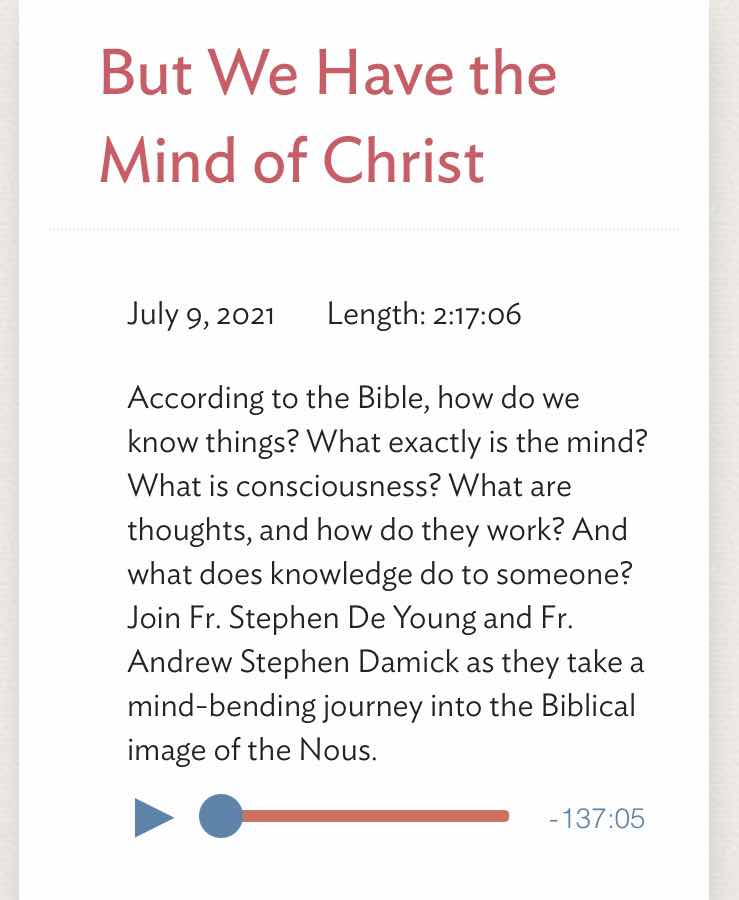
This is a dialog recorded by the Lord of Spirits podcast called  But we have the mind of Christ


There is a lot of great dialogue in there, but the piece that resonated with my earlier conversation was when they came to the idea of the logos. The logos is the quality of creation that leads us back to God, through Jesus. This excerpt from the dialogue gets at the idea….maybe haha.

Fr. Stephen: Right, you see this in both Romans 1. In Romans 1, where St. Paul is talking to the Gentiles about how they had knowledge of God before the Gospel came to them, when he talks about the “invisible attributes” (it’s usually translated in English) of God were made plain in the created order, in the creation; that they could have looked with wisdom and discerned those patterns and come to understand who God was. And then also in Romans 10, where he’s talking about, again, how they could have known the Gospel before the Gospel came to them, by saying that, as we talked about back in our Christmas astrology episode, that that was written in the stars of the heavens, that these patterns were there for wisdom to discern.
And in those passages in Proverbs and elsewhere in the Wisdom literature in the Old Testament where Christ is identified as Wisdom, it’s always in tandem with his involvement in creation, so that the second Person of Yahweh the God of Israel is involved in creation and is serving this function of wisdom, and this then gets developed through St. John’s use of “Logos” in the prologue of his gospel into what we see later in patristic theology, St. Maximus the Confessor being Exhibit A of the idea of Christ as Logos, and then the logiaof creation: the sort of structures, the patterns, the order in creation that leads back to the Logos.
Fr. Andrew: Yeah, and I’ve read some of those passages from St. Maximus, and I see people talk about them a lot on the internet. A lot of it’s kind of bewildering. I’ve seen a lot of weird things that are said about them. I don’t know, could you give a brief summary of what he’s— I mean, really, just—
Fr. Stephen: [Laughter] Yeah, yeah, yeah.
Fr. Andrew: Just to lay this out, because it’s one of the things that gets talked about all the time, or at least in the stuff that I read, but could be—I don’t know, can seem very esoteric, like “each thing has a logos in it.” What is that? Is that some kind of mystical diamond that everyone’s carrying around?
Fr. Stephen: Yeah, it’s not the essence. So you start with Christ. Christ is the Logos Theou: he’s the Logos of God. He’s the Logos of God. So that’s setting up a paradigm of the relationship. So he is how God reveals himself to creation. We don’t come to know God the Father directly. We come to know Christ; we come to know the Logos, and through him we come to know the Father.
So the logoi or the logia in all created things are that capacity in which… It’s coming at… I was using the phenomenological language of the way objects in the world present themselves to us. This is coming at it the other way. This is the element of the objects in the world that is accessible to our knowledge. So it’s coming at the same kind of idea from the other direction.
Fr. Andrew: I see. So this is what we can sort of perceive of them.
Fr. Stephen: Right, the order, the structure, what makes them them. So it’s closely related to nature. It’s not the particular essence, because we don’t come to know God in his essence. We don’t come to know Christ in his essence. We come to know his Person as the Logos of God. It’s not the individual essence, but it is the pattern, the form, the structure, and that is what is accessible to us as subject when we perceive and come to know object.
Fr. Andrew: Gotcha. Well, that makes sense. [Laughter]
Fr. Stephen: And that’s how they can lead us back, because if we start to understand these structures and these patterns, and we understand them through wisdom, at a larger and larger level, they lead us back to the Logos Theou, the Logos proper, which then leads us to come to know God.

As I was listening (and actually taking some notes, especially the meaning of terms I was not familiar with), I wondered: is logos what I was trying to express earlier, the shine of things, the ability to lead us upward, to a higher perspective?

It seems to make sense, somehow. 

Wednesday, 3 November 2021

A childhood memory of music

I was driving home from my stepdance class today our local radio station was playing classical music as they usually do weekday evenings. As a piece of music wrapped up they said it was Mario Bernardi conducting.

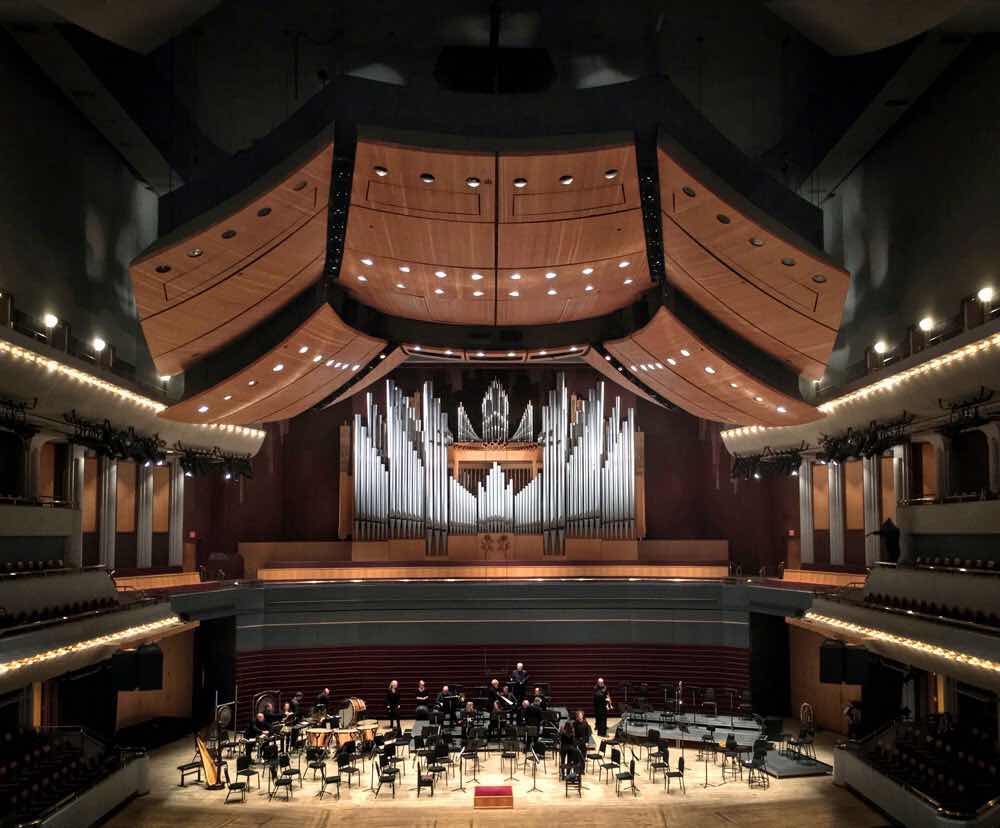
This immediately recalled my childhood when we would go to the orchestra frequently and Mario Bernardi was the conductor. I spent quite a few hours looking at the back of his head, if I wasn’t looking up at the ceiling or at the organ. Back then classical concerts were more formal and I do not recall ever hearing Bernardi speak. Nowadays the conductor is also a sort of PR representative for the orchestra and will turn around between pieces and talk to the audience about the music. But as a child I was left entirely to my own imagination, which was quite up to the task of keeping me entertained with my own interpretations of what I heard.


I hadn’t thought about Bernardi in years however, and my first thought was that he must be dead, and to feel a sense of belated loss at the thought. He did in fact pass away in 2013, after a lifetime of musical achievement and honours. He was born in 1930, eight years before my dad, and would have been in his 50s when I saw him on stage.  He was married, had one daughter born in 1969, and two grandsons.

There is a kind of existential terror in the realization that I’m slowly outliving the icons of my childhood. One, it’s a reminder of my mortality. But even more poignantly, it’s the realization that whatever they were going to pass on to me, they now have, and their role has ended, and I’m left with whatever I can remember, interpret, pass on. This is really very humbling, especially as I can still quite clearly recall being the daydreaming child in the concert hall, and most days, I don’t feel a great deal cleverer either. I’m mostly just the same person, getting lost in the music.

I suppose, if I want to quantify all the ways music has affected me, the list would look something like this:

—I have danced all my life, and consider it a key part of my identity;
—I did join an amateur concert band as an adult, and those experiences were key to me becoming, shall we say, a reasonably functional adult (I put most of my angst aside; I learned to be happy and belong) I haven’t kept up my music since having kids, but I still benefit in the big picture from the experience.
—Until recently I attended live music regularly, including classical
—I encourage my children to dance and play music 

I guess that is pretty decent. A life that is worthwhile , and not dull (at least to me!), and touched by beauty and meaningful patterns is an appropriate appreciation of this man who shared his art with me, a child way up in the second balcony.

I liked this interview: a bit of his personality comes through. 

Saturday, 3 April 2021

Easter memories

Back in 2006 I was 26 years old and living in Athens, Greece with my aunt, my dad’s sister. I had the opportunity to visit the island of Kefalonia for Easter break with a family friend. It was one of the most amazing experiences of my life, and one of my favourite all time memories.

I wrote about it on my old blog here. I’ve mostly archived this blog but I keep a few favourite entries online.


I think of my trip to Kefalonia, along with the trip a few weeks later to Scotland, as transformative experiences. Catalyst moments. The transformations had been underway long before the actual trips, and would continue long after (arguably still continuing, along with transformations begun even earlier). But sometimes a particular experience acts as a kind of plot device in my life, allowing me to see the structure of it more clearly. Or it allows me to pull something half-realized out of that mist and be specific about what it means.

I did not write all of my impressions of Kefalonia in the blog entry above, which was adapted from an email to friends and family and written mostly in a breezy style. Some years later, recently engaged to be married, I revisited the experience and wrote more personally about it.


Some places are just.....very special. They are more than what meets the eye. Kefalonia is one. I don’t know that I will ever go back, and anyway the “me” that returns won’t be the same as the one who was there before....but that’s ok. It’s as it should be.

Friday, 3 January 2020

Christmas Eve 2019: part 1

I had a couple of synchronous events happen on Christmas Eve this past December, and the thoughts, feelings and the desire to do something about  them have stayed with me. In so far as I have a goal for 2020 other then surviving, it is forming around this experience.

Here is the first part.

Mr. Turtle had to work until 5pm Christmas Eve, as did other family. So there were no big plans for this day, but I wanted to do something with the girls to make it memorable. I had an idea to go to a Christmas Eve service. But which church? There are a few in our neighbourhood; however I thought to include my mom (she is elderly and a widow) it would make more sense to choose one near her. She still lives in the house I grew up in, and a five minute walk away is St. Barnabus Anglican.

 I have a small connection with this church because many years ago, from the ages of 8 till 12 roughly, I took ballet lessons from a teacher who rented space in the church hall. Although we were not formally connected with the church we were involved a couple of times with their events. One was a Christmas musical production of Cinderella. We did a couple of dances: one was to The Teddy Bears’ Picnic and for the other we wore fluffy tutus and were part of the ball scene. It was my first time performing on a stage and therefore made a big impression. The second time was part of a St George’s day celebration and we learned and performed an English folk dance. These are good memories from my childhood, and they provide a connection to the church, which while tenuous is still more than I have to any other church. Those were sufficient reasons to choose it for our Christmas Eve outing.

I had no serious worries we wouldn’t be welcome, but I was still a bit nervous when the time came. I told myself it was ok to try something new.  5 year old AJ was enthusiastic, although she had never been in a church before and the closest thing she had seen to a service was Elsa’s coronation from Frozen.  We had read her some Bible stories in the past year, when she showed an interest. She received them much as she did fairy tales or any other story, coolly observing “But God isn’t real,” and assuming adult support for this statement, while we said things like  “well nobody knows for sure” and privately thought: “We really need a strategy here.....” Dani, almost 23 months, was ready for any adventure we cared to offer.

It was a beautiful evening, a winter dusk glowing blue with snow light.  I was reminded of childhood walks through the neighbourhood (although never to church).  The crunch of snow underfoot, the shining streetlights, the warmth and welcome of my family’s home after an evening of swimming or a ballet lesson. Or perhaps we might be walking up the hill to see an opera or a ballet at the auditorium. My dad always made sure we had season tickets to the opera, ballet or symphony, whatever other luxuries we overlooked in our frugal lifestyle. 

As we approached the church we saw people gathering for the service and we entered with them. The church was lovely inside: brightly lit with blond wood accents, high ceiling, stained glass windows, tall candles burning. The adults were handed a program and the kids were given glow sticks, which immediately interested then in the proceedings. They were also supposed to have musical instruments, but somehow we missed those.

I was half paying attention to what was going on and the other half focused on my mom and kids. They were fine though; AJ and Dani were curious enough enough about what was going on to stay engaged and not become overly restless.  As the service began I took it in with my available attention and found my mind bringing up different thoughts and memories in an effort to relate.

  • I followed others’ lead for the parts of the service where people spoke different words together, and felt awkward trying to find the right hymn in the right book, etc. But I appreciated the poetry of the communally spoken verses. Again I reminded myself it was better to do something awkwardly than not at all. Just showing up was enough for now: no need to have further expectations. 
  • The service included many references to the darkness of winter, and the return of the light, which was associated with Jesus. This made me think about how many cultures have rituals around the solstice, and the discussion of how Christianity adopted rituals from other cultures. I have never thought this was a big deal or really that relevant as more than interesting information. I would think it stranger for people to not learn from each other and adapt and adopt.
  •  I also thought of my self consciously non-Christian or New Agey acquaintances who post things like “Blessed Solstice” or whatever instead of “Merry Christmas” around this time of year. I find those statements a bit off key: what exactly is the significance of an astronomical event if you aren’t clear about the meanings you are attaching to it? Perhaps the people who say “Happy Solstice” do have a meaning in their mind, but it is never plain to me what that is, or if I am just supposed to read whatever I want into the statement. I prefer the Christian rite where the solstice is attached to a story with significance.
  • The most relatable part of the service was singing Christmas carols. And I knew them well enough that I could sing mostly without looking at the words, which allowed me to feel more a part of the celebration. Singing with others is a powerful transformative experience as is dancing with others; this is not the first time such an experience has taken me to another level of awareness. 
  • Singing the carols reminded me of why I am familiar with Christmas carols.  For several years in my 20s and early 30s,  I would get together with friends and sing carols around the neighbourhood. It was always a fun time of laughter and bonding and the spontaneous pleasure of surprising people with song and neighbourly spirit. After a hiatus of many years a friend and I organized a caroling evening last year, and we thoroughly enjoyed it. But this year our lives were too chaotic to make plans.
  • For many years (but not the last 5) I also played music with an adult concert band, and the Christmas concert was a yearly tradition.  Starting in November each band and choir would begin practicing their Christmas repertoire. The end of every concert was a Christmas sing along where the audience would get to their feet and sing a medley of carols with the bands. It never occurred to me that this tradition echoed a church service but now I saw that it did. I both missed the experience of playing in a band and having that yearly ritual and found it interesting to see the origin of it.
  • A family with children a few years older than mine was invited to help with some of the service, such as lighting advent candles. They wore special white robes.  At one point the pastor also invited all the children to come up front to hear the nativity story. AJ and Dani were curious but too shy to go. It was then that I had the thought: what if I had grown up coming to this church and these rituals had become second nature? What if my parents had overcome their fear of organized religion (that is a whole other story) and we had walked to St Barnabas every week to sing songs and speak words about faith? How would that have affected me as a person? I thought it would have likely been mostly positive. And what if my mother had had a community to turn to and support her when my father died? What if she had familiar people around her in widowhood instead of facing the nearly impossible task of forming new friendships as an elderly woman who is declining cognitively? 
  • Or, remembering a different time of my life: what if I had had a faith to turn to in my early adulthood? Almost 20 years ago, I was having the most memorable experience of my university years.  I was studying Old English and found my mind and heart stirred by the early medieval story of Caedmon’s hymn . Caedmon is an awkward, tongue tied cowherd who is too shy to recite poetry at the local pub. One night an angel visits Caedmon in a dream and commands him to sing a song. He wakes up with the words of the first recorded poem in English rolling off his tongue, about the creation of the world. In my fourth year of university I found myself similarly commanded. I wrote a poem as the final course project, and over the next year and a half it turned into an honours thesis. Working on my long poem was the most profound and glorious experience of my life thus far. Caedmon came into my life to give it a direction: of that I was sure. I did the best I could back then, both on the undergrad project and on the next two decades of adventure and growth. But if it was God questioning me through this story (and I wonder that seriously), did I have the full vocabulary in my youth to give an answer? I remember sitting in my advisor’s office trying to say I wanted to explore the relationship between Caedmon and God, but I became painfully embarrassed and couldn’t find the words. Despite the ecstatic nature of my personal experience, my poem was carefully secular though composed with all the love I could muster. What was I afraid of? I still can’t answer that.  If I had had a faith tradition to turn to, would I have had more confidence?
Of course, I am speculating about all these things, and very optimistically.  It is equally possible for organized religion to go wrong, to disappoint, to be destructive. And indeed, that is the side of it I know most about.

But even as I wondered about missed opportunities in the past, and acknowledged the feelings of curiosity and regret that followed, another thought swiftly overtook the first.  I am an adult now, with plenty of life still ahead (I assume) and the capacity to make decisions and set a direction. I do not need to be restrained by past fears or doubts. I can evolve. I can ask questions and seek answers. 

And indeed I have a responsibility to ask what sort of adult I should be, and to update the answer based on my most recent experience and insight. It is true that I had bad experiences with organized religion as a child. I saw and experienced the damage it did to my immediate and extended family.  I felt the difference between my personal experience of God and what the collective told me I should experience. All this is real. But as I participated in the service amid the light and the song, I thought I am not meant to be a cynical, fearful, defensive person. I am not meant to be the hurt, confused and frightened child that the cynical person is trying to protect. I can acknowledge that frightened child and respect that part of my experience without needing to BE that person for the rest of my life.  Because there is more to me. I have experienced beauty and truth. I have reached out and found the best in people. I have experienced the miracles of my own children, their perfect bodies and souls. There is so much that is good and expansive and joyful that I cannot and should not deny. But, I admit I need help. I don’t think I can be the person I am meant to be on my own.