Friday, 3 October 2025

How does the made up get into the real

 August 11th to October 3rd

This was supposed to be a weekly thing....right.

But I chose to read some of Seamus Heaney's books from my collection, and I went underground for a while. So that I actually get something written, I'm going to "cheat" a bit: at least it feels like cheating. I will write a collage of observations. Which is sometimes how Heaney writes poetry, though he is much better at it than I am. 

i.

Seamus Heaney is one of the few authors whom I regret is dead.

Mostly I prefer dead authors. Dead people cannot post their opinions anywhere on the internet (that may change with AI, I suppose). I will never awkwardly drop in on them trying to be "relevant". Dead people are mysterious, whether their audience likes it or not, or whether the deceased person themselves was at peace with becoming mystery. Dead authors leave behind their writing, an artifact. We may feel possessive or antagonistic toward their artifacts. With great self-confidence (or arrogance) we may try to claim or reject them for our times, our moment. But they remain both real and remote in a way that cannot be explained away.

Mystery gives the dead author dignity. It is dignified to belong to something other than the frenetic present with its abrupt electric pulses of attention. It is dignified to belong to the past.

All this is true of Seamus Heaney. He does belong to the past: the 20th century/early 21st century world he lived in as well as the historical and literary worlds he inhabits mentally. His poems are full of references to lifeways, physical spaces and sensory impressions that are anything but universal. His classical education is also far from universal anymore.

But I could wish that Seamus Heaney was still alive in the world.  He wrote about some of the darkest aspects of human nature and experience. He did not exactly comfort and he certainly didn’t justify. But he was not cynical either. When you read his poetry, you feel the realness of things, their complexity, their ambiguity. Maybe you see a glimmer of redemption (but he isn’t doing the work for you).

The world really just seemed a more decent place when Seamus Heaney was in it. It was easier to believe in poetry, for one thing. Even just a little bit.

ii. 

Without really trying, I worked sort of backwards when I was re-reading Seamus Heaney. I started with his last collection of poetry, Human Chain, from 2010. This book was published four years after Heaney had a stroke, and he wasn't far from the end of his life (2013). He was aware of this I think, though very much alive at the same time. You can hear him considering mortality and a life now mostly lived. When I first read Human Chain, I was in a very different space. I was a bride, and future-focused. It was one of those blessed states where you feel that all the threads of life have come together to form a perfect tapestry. The past, the future, pain, loss, uncertainty: even when acknowledged they lie lightly on your mind, and the faces of those more experienced glow in the moment with a reflected, re-discovered innocence.

Of course, it doesn't last exactly like that. There always a thread in the tapestry that comes loose, that snags. Within two years of my wedding, one of the young guests died in a tragic accident. Within five, my own father would pass away after a brief, agonizing illness. Within a year, I would enter my own valley of the shadow dealing with infertility. Reading through Human Chain with these memories (and many, many others) the poems that hit hardest are those about illness and recovery.

One of the most tender of these:

......

Miracle

Not the one who takes up his bed and walks
But the ones who have known him all along
And carry him in –

Their shoulders numb, the ache and stoop deeplocked
In their backs, the stretcher handles
Slippery with sweat. And no let up

Until he’s strapped on tight, made tiltable
And raised to the tiled roof, then lowered for healing.
Be mindful of them as they stand and wait

For the burn of the paid-out ropes to cool,
Their slight lightheadedness and incredulity
To pass, those ones who had known him all along.

.....

As a bit of internet reading will tell you, if you don't recognize the scene, the poem references the healing of the paralytic by Jesus in Mark 2. But of course it is from the perspective of "those ones who had known him all along." Their care and attention (and determination to get their friend to the right place where he can be healed) is identified as a miracle. Anyone who has been ill or helpless, can sense the appreciation of the miracle of love and connection that Heaney acknowledges here. Our dreams of self-actualization, of independence, of endless optimizing - even when seemingly realized - dissolve into the reality that we rely on each other in our frailty. And once the shock wears off, in the realization that loss is the constant, not the exception, well, somewhere in between the waves of grief, one can feel something like a return to sanity. 

iii.

I took District and Circle with me on a summer walk to a nearby reservoir.  Seated on a bench, surrounded by trees and shrubs, I could glimpse the lake busy with gulls and ducks. The city hummed behind me in muffled automotive sounds. Closer, just across the water, came the intermittent whistle of a steam train, as it chugged around and around a historical park.

The poems in District and Circle (2006) are probably the least personally relatable of the Heaney poems I read. They focus on specific historical moments; on the physical labour and danger of jobs that I have no experience of; and on people from Heaney's decades-ago youth, in what was basically another world.

What is relatable: the need to grasp, to capture an impression tangibly. Reading about firemen or farm labour or blacksmithing, you may feel something of the presence of the person, not just an observation.  As the product of a softer and sillier age, I think of the "Find someone who looks at you the way" memes.

Find someone who looks at you the way....Seamus Heaney looks at everything.

.....

Helmet

Bobby Breen’s. His Boston fireman’s gift
With BREEN in scarlet lacquer on its spread
Fantailing brim,

Tinctures of sweat and hair oil
In the withered sponge and shock-absorbing webs
Beneath the crown—

Or better say the crest, for crest it is—
Steel ridge, leather-trimmed, hand-tooled, hand-sewn,
Tipped with a little clasp of beaten copper…

Emblazoned with the number 17, and on my shelf
Like a trophy, like “headgear
Of the tribe,” as O’Grady called it

In right heroic mood that afternoon
When the fireman poet presented it to me
As “the visiting fireman,” twenty years ago—

As if I were up to it, as if I had
Served time under it, his fire-thane’s shield,
His shoulder-awning, while shattering glass

And rubble-bolts out of a burning roof
Hailed down on every hatchet man and hose man
Till the hard-reared shield-wall broke.

.....

How Seamus Heaney inspires me is to have faith in my own powers of observation. Searching the internet for copies of Heaney's poems, I of course also encounter much analysis (and I am sort of adding to it here, I suppose). But each poem is mainly a witness to the power of noticing who and where you are in your own skin, in your own moment. It's the opposite of waiting to be entertained, of having a screen take you someplace else. Even if Heaney is describing something in past rural Ireland, it does not feel like watching a documentary with a soothing professional voice over. This is not nostalgia.

What if there was a truth out there that only you could find out, by paying attention? Perhaps not a truth for everybody, but one for you, now? Maybe the next poem you read, or book, will change you on a way you can never know unless you bring absolutely everything in your consciousness to it. Your five senses, the stories of ancestors five generations back (what you can intuit if you don’t know) your memories from five years old, the last five people you spoke to…

Something like that. This is one of the challenges of reading these poems.

iv

I ended with the book "Electric Light." Many poems in this collection give me a surge of pure delight every time I read them.

Bann Valley Eclogue

POET

Bann Valley Muses, give us a song worth singing,
Something that rises like the curtain in
Those words And it came to pass or In the beginning.
Help me to please my hedge-schoolmaster Virgil
And the child that's due. Maybe, heavens, sing
Better times for her and her generation.

VIRGIL

Here are my words you'll have to find a place for:
Carmen, ordo, nascitur, saeculum, gens.
Their gist in your tongue and province should be clear
Even at this stage. Poetry, order, the times,
The nation, wrong and renewal, then an infant birth
And a flooding away of all the old miasma.

Whatever stains you, you rubbed it into yourselves,
Earth mark, birth mark, mould like the bloodied mould
On Romulus's ditch-back. But when the waters break
Bann's stream will overflow, the old markings
Will avail no more to keep east bank from west.
The valley will be washed like a new baby.

POET

Pacatum orbem: your words are too much nearly.
Even 'orb' by itself. What on earth could match it?
And then, last month, at noon-eclipse, wind dropped.
A millenial chill, birdless and dark, prepared.
A firstness steadied, a lastness, a born awareness.
As name dawned into knowledge: I saw the orb.

VIRGIL

Eclipses won't be for this child. The cool she'll know
Will be the pram hood over her vestal head.
Big dog daisies will get fanked up in the spokes.
She'll lie on summer evenings listening to
A chug and slug going on in the milking parlour.
Let her never hear close gunfire or explosions.

POET

Why do I remember St. Patrick's mornings,
Being sent by my mother to the railway line
For the little trefoil, untouchable almost, the shamrock
With its twining, binding, creepery, tough, thin roots
All over the place, in the stones between the sleepers.
Dew-scales shook off the leaves. Tear ducts asperging.

Child on the way, it won't be long until
You land among us. Your mother's showing signs,
Out for her sunset walk among big round bales.
Planet earth like a teething ring suspended
Hangs from its world-chain. Your pram waits in the corner.
Cows are let out. They're sluicing the milk-house floor.

-Page 12, Electric Light, 2001, Seamus Heaney

I love the playfulness of this poem, the way particular detail is wound in with existential contemplation. It could be fun to get into the analysis, starting with looking up all the Latin phrases and references which I do not know off by heart. I don't necessarily have an urge to do this every time I read it though, nor to explain them away. What I like best is the way all the lines run off my tongue, the way they feel like speaking a blessing.  I read it and I think, everything is beautiful, but especially the things Heaney has noticed, but also everything.

In another poem, "Known World," Heaney asks the question I chose as the title of this piece: "How does the made-up get into the real?" He replies with: "Ask me an easier one!" It is a question I ask myself though, especially when thinking about poems or stories that I have continued to read all my life. The best literature does enter "the real," perhaps even seeming more real than what we call "reality." I think Seamus Heaney does answer that question, in all his body of work. The made-up (poetry? mythology? history?) gets into "the real" when you carry it with you, when you observe closely and understand how stories and experiences speak to each other. That is the lasting impression that Seamus Heaney leaves on me: how possible it is to be intensely, memorably, painfully and gloriously alive, connected with surprising tendrils of story to other humans. 

An older piece of writing I did on Seamus Heaney:

Heroes: Seamus Heaney

Links:

Original Writing:


Writing about Poetry:

Poetry (outlining my motivations for revisiting the reading and writing of poetry)


Other things I have previously written connected to poetry:


Wednesday, 13 August 2025

Saying yes, saying no

(I've started a routine of reading poetry again, and part of my so-far enthusiastic and optimistic goal setting is to occasionally write about a poem/poet. Here is the first entry, hopefully one of many.)

Week of  August 5th to 8th

The poet I chose this week was Esta Spalding.  Two of her books reside on my shelf dedicated to poetry: Lost August and Anchoress. When I took them down and opened them up, I found an autograph and greeting handwritten to me from October 2001. So, apparently, I went to a poetry reading by Spalding in my early 20s.  I have no memory of this event. But I liked her poetry enough to either buy two books at the reading, or to buy them first and take them with me for autographs.
 
The time matches up with the last year of my undergraduate degree. I was taking a creative writing course, and part of the requirement was to go to a number of poetry readings. Perhaps this reading was one of them. Or, it's possible that I had been assigned Spalding's books as part of another course, and was told about the reading by a professor. Again, I have no idea which it was. It's possible though, that somewhere in one of my boxes is an account of the reading that I wrote for marks, or even an essay featuring Spalding. That's an amusing thought, though I'm not sure I'm tempted to go looking. Maybe later. As a life-long journaler, I'm always fascinated by how my memory edits experiences over time. Although, when I do look back on my contemporary accounts, I often conclude that the memory I have is the superior edit!

I chose Lost August because, well, it's August. As I read through the book, the music of a few poems sounded familiar to my ears. So, I know I did read this book, possibly many times.

But the poem that struck me, in August 2025, almost a quarter century after I bought it, is not one that I remember reading.

Recipe 
By Esta Spalding

At first, she wouldn't eat beef.
She lived with the living meat, swam in
the lame eyes of veal. Then,
neither chicken nor fish,
nothing with a face.
She took no lover
who ate it, no tainted kiss. Now she won't
read anything written by one carnivorous:
images brewed on flesh, on bone.

I wanted to write for her something
with a vegetable base - I'm finding my mind has
changed, branching, it drinks
sometimes entirely brightness - 

--p. 46, Lost August, 1999

The poem follows the changing perspective of a "she" who follows a more and more restrictive vegan diet. Perhaps this poem stood out for me because in our contemporary time there is much conversation about "extremists." This is a word calculated to cause anxiety in those of us that don't think of ourselves as extremists, and probably eye-rolls in those who have been labeled that (does anyone self-label as an extremist, without irony?). But it's also a vague word, one that obscures more than it reveals. What is an extremist really? Are they always dangerous? How does one become one? Can any of us become one? What makes it tempting to become an extremist? How are extremists useful?

The first thing I notice about the poem, is that it does not judge "her." There is a mix of what seem to be neutral descriptions "She wouldn't eat beef" along with statements that sound like they were made by "she" herself: "[I will eat] nothing with a face."  In contrast, imagine if "she" shared her beliefs about veganism in an X post, or on Tik Tok, or even in a SubStack essay. There would be a fractal explosion of rude and bad-tempered comments following it, perhaps with a complementary structure of sympathetic ones. "She" would be called all the insults of the moment, examples of which I will not even bother to give because I am not sure what is the latest fashion in insults. (Ok that is not entirely true: I've noticed the R-word is making a comeback.).

But the poem observes, with a sympathy that implies affection for "her" rather than a whole-hearted support of her beliefs. At the end, the poet playfully considers what it might mean to write "with a vegetable base." It's not clear to me what this means, and probably it's not clear to the poet either, as the poem abruptly dissolves in a self-regarding "brightness."

Perhaps this is an advantage of poetry, and a reason to read and write it, in 2025: it gives you the space to play, to take an idea to its furthest possible point, to an extreme, without threatening anyone.

Continuing deeper in: I am not, never have been, and do not expect to ever be a vegan. But, I find myself relating to the trail of negation in this poem. I wonder if many of us could, if we were honest with ourselves, and put aside any opinions we might have about veganism.

What I am talking about could perhaps be seen as the mirror image of addiction, or at least the temptation to always say yes to more: more material stuff, more stimulation, more variety. Even if it is encouraged in our consumerist society, I think most people know that always indulging yourself is at the very least a bit unseemly, and quite possibly unhealthy or immoral.

But what about its opposite and complementary impulse?

What I mean is, instead of saying Yes to every wish and impulse, you start saying No to them. Now the wishes and impulses do not exponentially magnify, they are reduced. It's like the silly game we used to play as kids with a grape. "This is Paul," we would say, holding up a single grape. You eat half of it: "This is half of Paul." Then another half "This is a quarter of Paul."  "This is an eighth of Paul." "This is a sixteenth of Paul." The goal was to keep eating half of what remained until Paul was reduced to a piece of grape so small you had no choice but to finally eat the whole thing "This is none of Paul." (#whatpeopledidforfunbeforetheinternet)

If you didn't have the great good fortune that I had to be amused in this way by older siblings, then think about what can happen with ideas. Take a swathe of ideas or beliefs about something, and make half of those beliefs unacceptable. Now you are focusing on the half that remains. Your focus will be twice as intense. Now, make half that set of beliefs outside the pale. And repeat. And repeat.

Is it just me, or is this not an uncommon experience? With each "No," your attention becomes more and more focused, and if the process continues, will become hyper-focused on a tiny sliver of belief that represents the ultimate truth and rightness of something. And contrary to gluttony, which feels intuitively icky and selfish, this train of negation can feel.....well, quite virtuous and enlightened.

On the other hand, if you know someone who has abandoned themselves to this series of negations, would you not agree they are most likely insufferable?  While we might have still have love for the "she" in the poem, would we look forward to going out to dinner with her? Or discussing literature?

In the last stanza, the poet observes that her mind has "changed". Perhaps this is because she has grasped the logic of her vegan subject and regards it with sympathy? But then what is the result? Her mind starts to drink "sometimes entirely brightness." The words "bright" and "light" are often coded positive, as opposed to "darkness" (somewhere malice or evil or neglect lurk). I don't think "bright" is coded positive in this poem though, or it's at least ambivalent. "Brightness" is insubstantial: no human can realistically subsist on "brightness". And the poem cuts off at this point. There is no "there, there." Maybe it starved to death ecstatically, but it's still dead.

I think this "brightness" is the same as the "deep blue air" in Philip Larkin's High Windows.

Rather than words comes the thought of high windows:   
The sun-comprehending glass,
And beyond it, the deep blue air, that shows
Nothing, and is nowhere, and is endless.

The subjects in "High Windows" are not denying themselves, they are embracing nihilism and doing whatever they want. But they end up in the same place ultimately as the vegan who denied herself more and more, in bright air that shows nothing, and is nowhere, and is endless.

It's not endless of course, everything ends. And perhaps, to answer one of my questions, this is what makes extremists useful, at least the ones in poetry. They have the courage to take ideas to their end, so we can perhaps see where those ideas go before falling into them face-first.

Links:

Original Writing:


Writing about Poetry:

Poetry (outlining my motivations for revisiting the reading and writing of poetry)


Other things I have previously written connected to poetry:


Saturday, 26 July 2025

Poetry

Recently, I was reading Paul Kingsnorth’s essay The Language of the Master (which is not new but was new to me.) After he describes Iain McGilchrist’s conception of the Master and the Emissary (with reference to the human brain), he writes:

“…What languages does the Machine not speak

“If the emissary runs our world, then we all speak his language, because we have all been trained to. It is the language of clarity, dissection, parts and not sums, specialisation, dis-enchantment, reason, theoretical rather than practical expertise, technological ‘solutions’, bureaucracy, abstraction, mechanism. The emissary will, left unchecked, turn our world into a machine, because he thinks it already is one. In the process, he will turn us into machines too.

“Linguistically, then, we should all be encouraging the master to regain power. This means working with the ways of seeing and communicating which machine culture downplays or ridicules, but which every traditional society before modernity’s advent understood and worked with. That means myth, religion, practical expertise founded upon physical work, rooted imagery, holistic conceptions of life, communication with non-human beings, poetry, complexity, questions that do not have answers, questions which are not questions at all. It means seeing time as a circle, not a line, life as a process, not a puzzle to be solved, death as a part of that life, not an enemy to be defeated. Sometimes – horror of horrors – it means embracing unknowing. It means learning to stop, and be silent.”

Kingsnorth has a talent for asking just the questions I need to send my thoughts in a fresh direction. But this is the first time that I have read something and thought: that is a good reason to write poetry.

Many years ago I used to write poetry, and considered it fundamental to who I am. But I stopped shortly after graduating from university because I couldn’t see how my poetry could connect me to a larger community or purpose. I knew of a few options: to continue writing, alone, and submitting work to journals read and edited by a tiny minority of people I didn’t know, and had no particular reason to respect. I could join local writers’ groups, but they weren’t doing the sort of writing I was interested in (to put it politely). I could join academia, which was additional expense and years of my youth and I could perceive, even then, not a world I wanted to be part of. So, my energy went into other things, and I’ve never regretted it. But now, reading this article, I see a purpose for writing poetry again, or at least writing poetically.

Do I even know how to write poetry anymore? I certainly couldn’t give anyone instructions how to do it. My instinct tells me to start with small observations or episodes of life that represent bigger questions. Put words on paper (real paper, not a screen) and then start re-writing from there. I can even think of blog entries that could be starting points. But rather (and I have observed this already happening) writing poetry will lead me to look at the world in a manner conducive to poetry. That is perhaps the bigger point.

Right now, I also have no need to force poetry to serve as a means to an end in my life. My life already “is”. It has its own purpose and validity. Poetry can just be poetry. I don’t have to write like I did twenty-five years ago. I don’t have to write like anyone else. I can see what direction it goes.

What I will need to figure out though, is what sort of shape my poetry could take. What I have now is an embodied memory of what it means to write poetry. What I don't have are goals. I know I need some kind of a goal. I'll also need somebody to share writing with, so I will need to look into some sort of group or mentorship situation.

Meanwhile, the notebook continues to fill!

Links:

Original Writing:


Writing about Poetry:

Poetry (outlining my motivations for revisiting the reading and writing of poetry)


Other things I have previously written connected to poetry:


Saturday, 10 May 2025

Goals and things this year so far

With reference to.

It’s April May, and I thought I would review how my various projects are going.

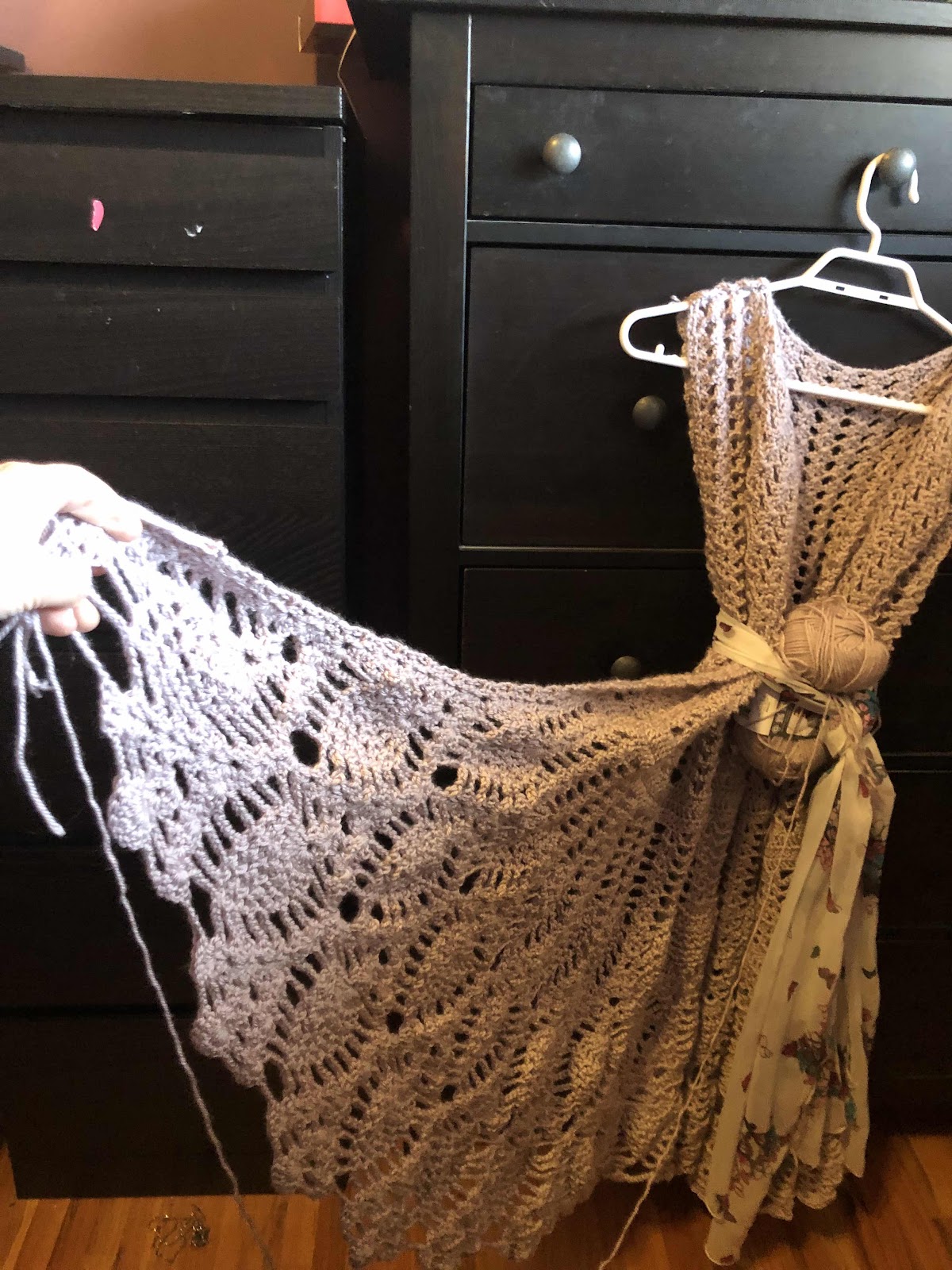
1)The Fairy Queen coat: COMPLETED

This was a fun project, and the final result is pretty, and cozy. I wore it when we went out of town for a weekend. It is comfortable to wear, but a bit of a conundrum when I need to take it off: it’s too heavy to hang up and I don’t feel comfortable just leaving it in a pile somewhere. But it is perfect for spring days when I need a layer but don’t want to wear a coat or jacket.  Plus, it is so very, very extra.

2) Bead crochet:
I haven’t tried this yet, as there are so many other things I’m doing. I may get to it later in the year, or maybe next year, it remains to be seen.

3) A doll inspired by our new adult group dance. I’ve made quite a bit of progress on this project. I love our dance and so do audiences and festival judges, so I was motivated to begin the doll. One good thing: the pattern I’m using seems to be creating a smaller doll that works up quickly, so that should leave time for all the details I am imagining.

4) Gift projects: Nothing major yet. Impulsively, I crocheted some “nests” for chocolate Easter eggs. They worked up in about 5 minutes. I filled some with chocolate and gave to co-workers and also made a couple nests for the girls’ egg hunt.

5) Sewing: plan altered. I found a large piece of free material so decided to use it to make a dress first. IN PROCESS. I expect this to be a learning experience, so I’m relaxed about it. A few points so far:

-People often comment that I must have a lot of patience to do handcrafts. This comment amuses me because I don’t need patience for things I enjoy, but for things I don’t. Having said that, my experience of sewing so far is that it requires a lot of patience, and I haven’t even started sewing yet.

- I bought a PDF pattern, and had to print 60 pages then piece them all together very carefully with tape , then cut out all the pieces. This took about two afternoons. I was also grateful for my yoga classes as I spent a lot of time on the floor squatting.

- after this paper craft was finally finished, of course I realized I didn’t have enough material after all for the long flowy skirt of the wrap dress pattern I chose. (I guess you can’t skip over the math part.) I decided to shorten the skirt panels by folding the paper patterns until they fit the piece of material. Not sure how long the skirt will be after this modification, but I’m guessing knee length or maybe slightly below.

Currently, most of the pieces for the dress (but not quite all) are cut and sitting on a pile on the ironing board. Not sure when I will finish the cutting and start the actual sewing, but I am most of the way there. Compared to yarn crafts, sewing seems to take a whole lot more prep and effort to even begin, but some of this  is no doubt due to being a novice. Next time though, I think I will look for a pattern I don’t have to print and tape together, as that was a huge amount of work, though not unpleasant to do with a podcast playing.

6) However, a related task that I can check off is that I did indeed clean up and organize my sewing/yarn corner, confirmed the sewing machine is in working order, and finally bought a new ironing board cover. While my mind might contain a low level of chaos at all times, my supplies and working area need to be very tidy for any magic to happen.

7) Lunch prep is still going quite well, though staying ahead of the girls’ often randomly changing food preferences can be annoying. I also tried making shepherds pie, quite successfully. As a cook, I lean toward soups and casseroles: comfort food. I joke that I cook like  it’s the 1950s or a funeral. Shepherds’ pie (inspired by a co-worker who brought her leftovers to work) is totally my style. I have also made some quite delicious fried rice a few times recently.

Something else I have been doing better lately is using leftovers, either prepared food or partially used ingredients.

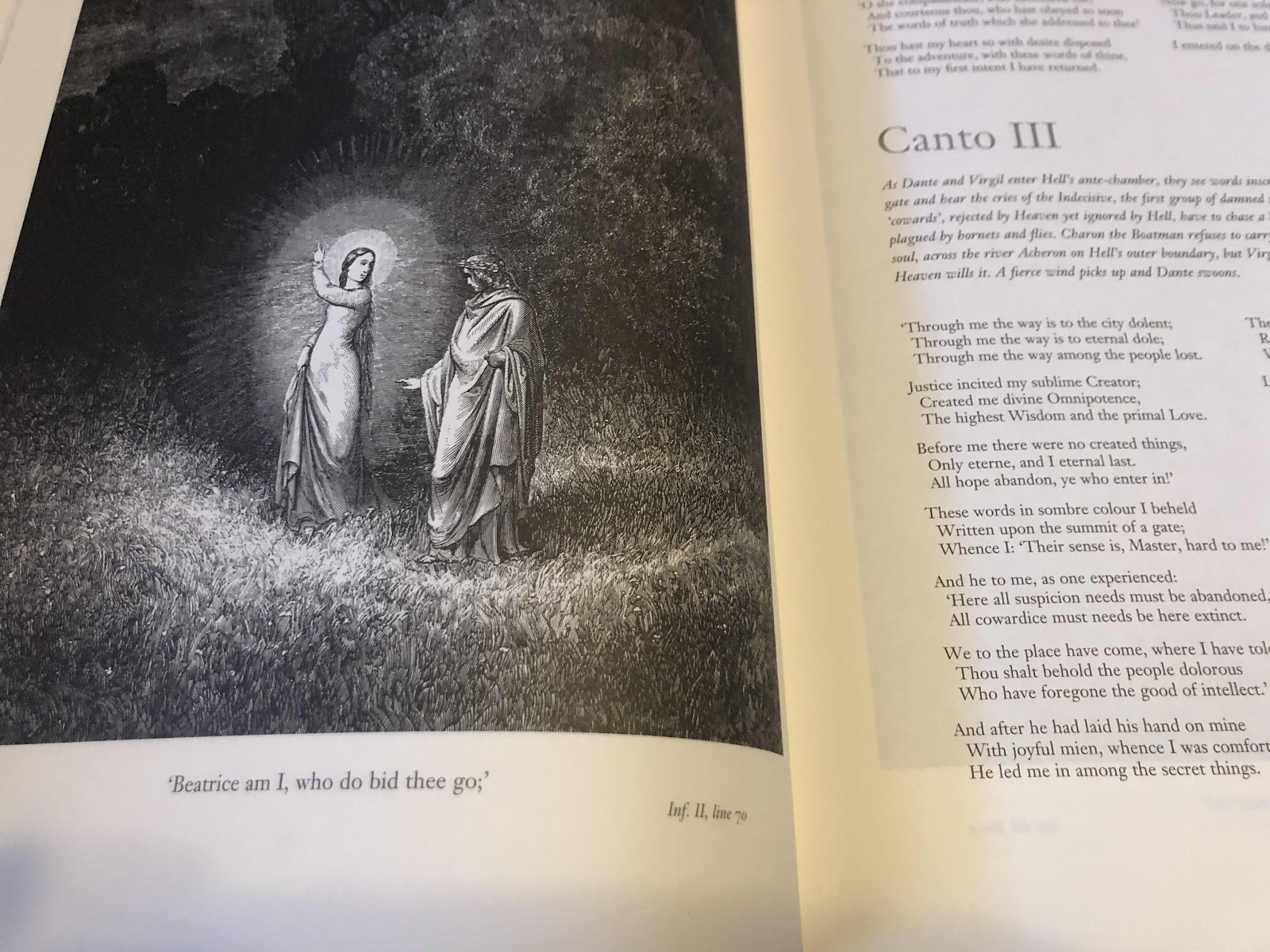
8) The Divine Comedy: I have been finding  it a bit of a slog and haven’t picked it up in a while. Wondering if an audio book might be better (though I do like all the pictures in my book.) I also can’t say I find it a particularly spiritual experience to read so far. It seems more about the author putting all the people he knows as well as historical figures and classical writers in their appropriate sections of Hell. This is an interesting project, and would be pretty spicy commentary for someone who was familiar with all these people. An updated version, featuring contemporary celebrities and politicians could be highly entertaining.

I also am aware of an online course on the Divine Comedy, which could help to make it accessible. (No doubt there are several, but I have listened to and enjoy Pageau/Rohlin’s work). It’s expensive though, and would also take time to go through, so I’m not sure, but maybe. I know the Bible (especially Old Testament) has been a lot more approachable and enjoyable when I listen with commentary (see here and here). I like to think I can just dive into things and figure them out, but the truth is my youthful literary education had plenty of gaps in it, and I can’t assume I have the background to access all these books.

9) Novels: I have not read any novels yet this year. I have come across various recommendations, but I’m not sure I will be able to track them down for when I actually want a novel to read. Maybe I should make a list somewhere.

10) Spending time with family members: hit and miss, could be better. Time very easily goes by without scheduling a visit. Plus other obligations, getting sick, all that stuff. Same comment with regards to getting inside a real church every now and then.

Anyway, now for emergent projects!

A) Working on a crocheted vest. Slightly obsessed with sweater vests lately, and not excited by the ones in stores. I found a good designer, and will likely make two of her patterns. But the current one is a brilliant sky blue, perfect for spring, and for working on the hour before going to sleep (often with a podcast on).

B) repairing things. Going to try shoe repair, and also a blouse that tore at work. More on this later, hopefully I can report success.

C) Spring wardrobe shopping. This might be more pampering myself than a goal, but the goal is to dress in a more interesting way every day. I have a habit of saving “nice” clothes for some hypothetical occasion, and dressing myself better in my imagination than I do in real life. I’m trying to actually live in what I own, and enjoy it. Plus, women have to reinvent themselves every five or ten years, at least I have observed that, and I am embracing the process deliberately.

D) Research on who/what to vote for: I completed TWO votes end of April, one of national significance and one of personal significance. I put the most effort into the personal one, and hope for the best in the national one. I’m not fond of political drama, and dread being pulled into it for any reason. But sometimes the drama finds me, though I avoid quite a bit of it by not engaging with the internet. 

E) Digital fast (clearly not observing it during this writing). I participated in a sort of digital fast up till Easter. Basically I deleted my Substack app and limited time on messaging apps, because it seemed like these ones were the most tempting. There was some reduction in the time I spent online, but honestly not a huge amount.  I observed that while the internet can waste my time, I also have an internal wish to waste time on occasion and if I am denied one outlet I will look for another. So if I’m not able to read my Substack feed I start googling fashion, for example.
But I do think that I benefited from not having my attention so fragmented, and I did make progress on craft projects, as above

F) (but not an F grade!) Yard work! On a particularly pleasant day of Easter weekend, I spent a solid afternoon doing physical work in the back yard. I had one goal, but ended up surpassing it, raking the whole yard and sweeping the patio. It was warm, thr birds were singing, and I was surprised how relaxed I felt, and even did not feel frustrated over the general shabbiness of our yard which persists despite any amount of labour. It really was joy in the process.

Summer seems just around the corner here, so more to come!

Sunday, 16 March 2025

Sources of light

Paul Kingsnorth published this article on St Patrick today. At the end he shares St Patrick’s Breastplate. It reminded me that I try every now and then (not often enough truly) to go somewhere in nature and read it out loud.

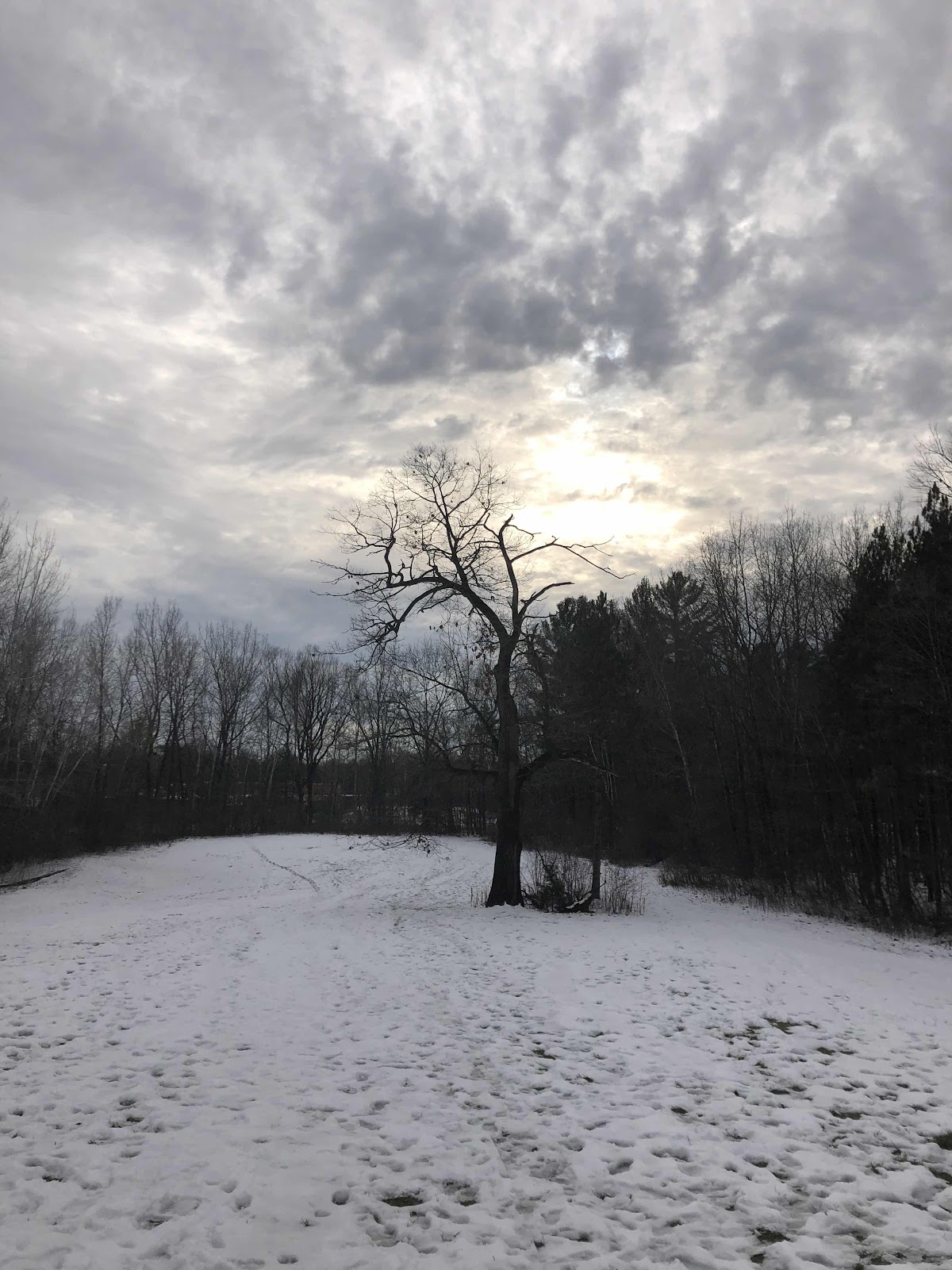
Most recently, when we were on vacation over Christmas, I went for a walk with the kids and found this surprising little clearing near a playground. In the middle were a couple of trees and a hill that called me to climb it. On top of the clearing I read St Patrick’s Breastplate aloud.

I asked the girls to join me for a couple of stanzas. It feels awkward to say aloud things that feel natural to think and feel. But I figure I have to try, and the need is always stronger around Christmas time. There’s something about Christmas that makes me antsy: it’s like I have all this energy and it has nowhere to go and no way to be expressed. I always miss my lack of religious practice most around Christmas.

I could say a lot about the last week of December 2024: maybe later. But this walk up the hill by the tree was a peaceful, complete moment. I remembered it when I read Paul’s essay.


Monday, 17 February 2025

Dreaming of spring

I probably think in pictures as much as I think in words. And often these pictures have to do with fashion: or costuming for life, as I like to sometimes call it.

I like to look up different kinds of style, and it’s what I’m most likely to do when I’m too tired to do anything else. About the only way that pop culture still has a grip on my imagination is through fashion: I don’t know or care about most celebrities or what they are doing, but I don’t mind looking at what they are wearing. 

Of course one can take this too far. I love the feel of a well-fitted and pretty garment, but experiences matter more than what I am wearing when I have them. Likewise it’s possible to try too hard.  A lot of movies seem to prioritize atmosphere and costumes rather than story.  A couple of random examples: We were watching Tim Burton’s Alice in Wonderland yesterday, and the moral of the story is ostensibly about Alice not following feminine convention: marrying, taking care of a husband, etc. But every other scene has her breaking out a new outfit, including the last one where her new job offers an opportunity to pose fetchingly on the deck of a ship. There isn’t much straying from feminine stereotypes in the end, at least not those that involve shopping.

Over Christmas holidays my mother-in-law took me and the girls to see Wicked. As a whole this movie underwhelmed me, but they certainly were trying extremely hard with the sets and costumes. It looked like 80% of the budget at least.  Amid the excess of colours and trimmings and mash-ups of every possible style, I found I had little attention or sympathy for any of the characters. They all came off as ridiculous, because what else could you be in such an absurd setting.* (I didn’t see the movie till the end: my youngest daughter got very upset during one scene and we left the theatre: thinking about it, I believe her instincts were sound.)

* I realize I might sound cynical. I might be turning into my dad when it comes to movies. Growing up, he refused to watch almost anything made after 1965, and his reaction to a majority of media was “this is completely ridiculous.” It’s not even taking offence at that point, it’s an inability to even engage. 

So, I don’t particularly enjoy seeing my enjoyment of fashion taken to excess. At the same time, it is an art form and as such, you need to be open to experimentation. I enjoy combining pieces in fun, practical and surprising ways, and I enjoy watching others do the same. It’s probably the easiest way to bring a little creativity and whimsy into every day. And as the seasons turn, I always long for something fresh and different to match the moods of nature.

My challenge right now is to bring just a hint of springtime into outfits that still need to be cozy most of all. It is well below freezing outside, and my workplace is so poorly heated that going without a sweater is unthinkable, and often said sweater needs another layer on top of it.

I played around with lace and florals and bright prints and colours: all these have a whiff of spring and summer to them. But they can still be layered for warmth. As far as footwear goes, until the snow melts it will be boots or rubber boots: not much room for imagination there. But my little experiments are making me feel slightly more patient with the last few days of the polar vortex, at least. 

I modelled for some headless photos here, to help me remember my ideas. I often spend time planning fun outfits then get apathetic in reality and just wear the same thing again. I quite like these though and I think I will wear them to motivate me to show up for the final weeks of winter with some enthusiasm.

Saturday, 18 January 2025

2025 Things of Beauty

The past couple of years my “New Year’s Resolutions” - if that’s what they were - were more like themes or intentions. That seemed like the right approach at the time, but I find myself in a different head space this year. I have instead very specific projects and actions in the real world that I want to do.

If there’s anything connecting my ideas together this year, it’s a commitment to beautiful things. So here goes.

1) Finish my crocheted Fairy Queen Coat. I bought the pattern a couple of years ago, or close to that, and only started it last spring or summer. But it’s a bigger project, so I’m actually progressing quite well. Because the Fairy Queen Coat is for me, and it’s not being made for any specific occasion or purpose, it has gotten bumped down the queue a few times as I took on time limited projects or gift projects or whatever. But I’ve always found it delightful to return to. It’s whimsical, pretty, and relaxing to work on.


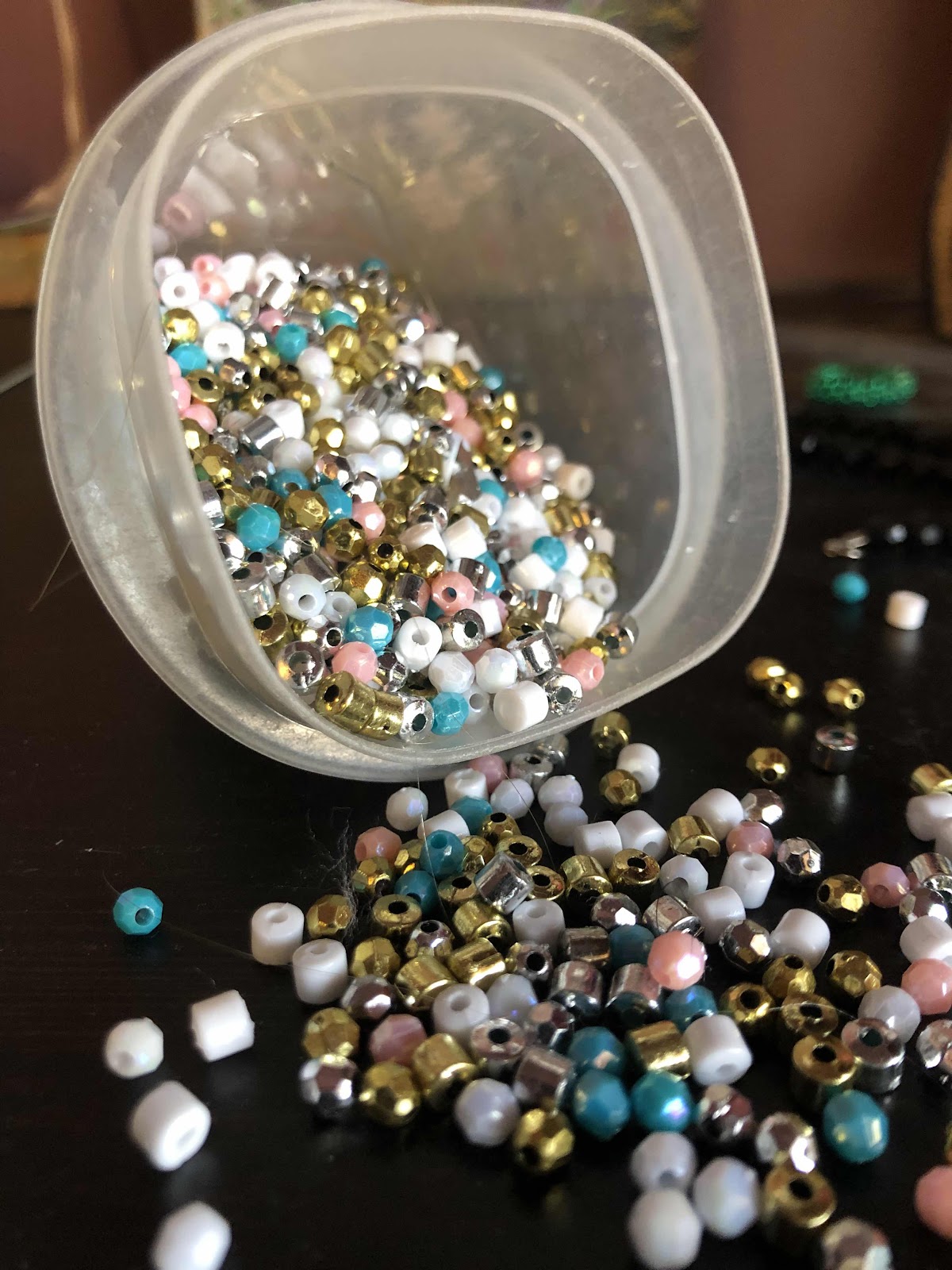
2) Try bead crochet. I’ve been thinking about this for a while, but haven’t yet tried. I have some Christmas gift money set aside to buy a book to learn. While I was cleaning up I also found some pretty beads I’d given the girls a few months ago. They had made a few things with them but then forgotten about them, and scattered quite a few on the floor, which makes them officially forfeit. I picked them all up and set them aside for experiments. The colour palette is lovely.


3) Crochet a doll (and a tree, and some birds) inspired by our new dance. So far I’ve only chosen the patterns. I think this project will be super fun however. 

4) Gift projects: something always comes up, so I’m sure there will be one or two of these, but I don’t have any plans yet.

5) A major goal is to expand my sewing skills. I’ve done a decent amount of hand sewing: repairs, alterations, small projects. However, I want to learn how to cut and sew an actual garment. And I have a project in mind: My own Billie kilt.

I’ve been stepdancing for over 20 years. I started off self-taught, then 14 years ago I found a dance teacher in my city and I have been dancing with her group since. Many of the ladies in that group are long term dancers though of course people come and go. We don’t perform often but occasionally something comes up and when it does, we wear black with a short plaid skirt of our choice. I have wanted to get a new one for a while. But I don’t particularly want a mass produced item: I want it to be special, something that honours my long personal connection with Celtic music and dance and all the ways it has been a powerful creative force in my life.

I have no Scottish ancestry, so I don’t have a personal connection to any tartan. However, there is a pretty tartan that is named after my province. So it seemed to me that that was the one to go with. I could not find a ready made skirt in this tartan, so, obvious conclusion: I will make one.

I will probably use this pattern:


And there’s even a video to help:


This project might have intimidated me previously but I don’t see that I have anything to lose, and I’m just going to go for it and assume the best. That’s what 2025 is all about!

6) Unfortunately, or perhaps fortunately, I will have to clean up my sewing / craft area first, which is a utter, uninspiring disaster.

7) I have had a lot of success since September with preparing appealing, (mostly) healthy and enjoyable lunches for all the family. I have been making them mostly the night before and it has made our mornings easier. My goal is to keep this up. It’s been very satisfying. 

8) With some birthday money, I bought The Divine Comedy by Dante. I have heard about it since my 20s when I had a friend who loved it, and most recently I read Rod Dreher’s Living in Wonder (that could be a whole other post) where he writes about how powerful it is. But I have never read it. I found a beautiful illustrated edition at a bookstore* and I have started reading it. It’s been a while since I read this much poetry but it is a good challenge.


*The bookstore where I found it also could be a whole other post. But we’ll keep the tone upbeat.

9) Next time I want a novel, like if there’s a long plane ride and/or theoretically relaxing vacation in my future (nothing planned yet) I want to read Kristin Lavransdatter.

10) Do more activities with family members, especially elderly ones. Try to overcome my aversion to phone calls enough to stay in touch more.

Finally, in the waning days of 2024 I made my first and most urgent New Year’s resolution: to go in person to a church service. I’ve known for quite a few years (since starting this blog actually) that I wanted to and/or should go, but I never actually did.

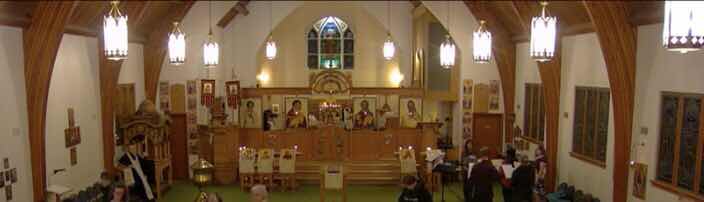
This month I went to a Vespers service at an Orthodox Church. One hour on a Saturday evening. I mistakenly went in the back door of the church - of course I did, that is so symbolically appropriate - and had to awkwardly ask someone to please tell me where to go. A nice lady showed me: I think she sang in the choir. 

The church was very beautiful and smelled very good. Nobody has ever suggested I go to church because it smells wonderful, but there you are: I had to attend in person to learn that.

A few brief observations:
-Although the atmosphere is lovely, and there is a lot to observe with icons and sacred objects of various kinds (I don’t know all the right terms), there is nothing focussed on entertainment in the Orthodox Church. In fact most of the time I couldn’t tell what individual was speaking or singing: the sound seemed to come from everyone and no one.

-There is something about being in a space with people who are focused on something higher than themselves that isn’t like anything else. Too often interactions with other people are about them getting something from me, or me getting something from them, or all of us getting more stuff, or we are all in our cars making each other angry. Being in the church with people worshipping wasn’t anything like that. It was’t even like taking a class or talking with friends or walking in a park. It was different. I knew it would be different before I walked in, and that made me anxious and afraid and maybe caused me to procrastinate for five years (but who’s counting). I can’t say I feel totally comfortable now or that I understand. But the fear and anxiety of experiencing something different is gone.

-The service was mostly singing, of various prayers and I think Bible stories, but to be honest I didn’t follow most of it. Some people had yellow pieces of paper that looked a kind of cheat sheet: I think if I had gone in the front door I could have gotten one. But I didn’t have any expectations: this evening was entirely about showing up. One of the reasons I chose this church is because it is English speaking, but on this evening anyway, I can’t say it mattered what language they were speaking. 

What next? I intend to go again, probably on a Saturday and/or Sunday next month. I likely won’t write about it again for a while. I feel like writing and thinking can turn into an excuse to not actually do anything. (What could I possibly know about that!)

I meant to discreetly take a photo on the way out, to prove I had really been there, but of course having come in the back door, I didn’t know which was the correct door to leave by either, and while I was trying to decide who to follow to get out I forgot.  Here instead is a blurry still, not taken by me. To remember there is a first time for everything!